Enjoy Monkey Retro Vector Illustration Review
When I first opened the folder for Enjoy Monkey Retro Vector Illustration, I didn't just see a cute graphic; I saw a potential bestseller. As someone who has stitched thousands of designs and reviewed countless files for my own shop, my first instinct is always to look past the pretty preview and ask: how will this actually hold up under the needle? This design immediately caught my eye because it taps into that nostalgic, mid-century vibe that has been dominating the craft market lately. It feels warm, approachable, and perfectly suited for the handmade aesthetic that customers are craving right now.
The file package includes AI, EPS, PNG, SVG, and PDF formats, which is a solid foundation for any serious designer. However, having vector files doesn't automatically guarantee a perfect embroidery result. The real test happens when you move from the screen to the hoop. My initial assessment suggests that Enjoy Monkey Retro Vector Illustration is a versatile asset that could elevate a small business's inventory or add a personal touch to a family heirloom, but it requires specific handling to ensure the final product looks professional rather than amateurish.
First Impressions and Design Personality
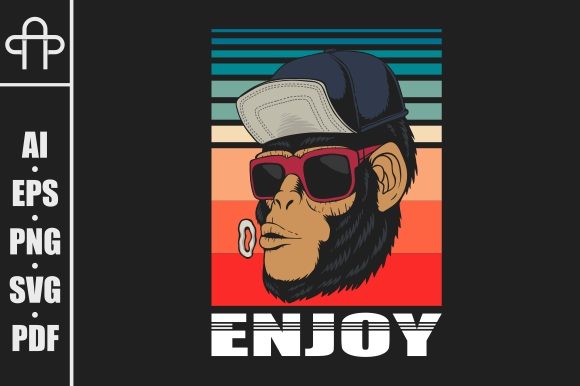
The visual personality of this illustration is undeniably playful. The retro style implies a sense of fun without being chaotic. For an embroidery project, this mood translates well to items that need to convey warmth and comfort. Think about a custom embroidered tote bag for a local coffee shop or a personalized gift for a baby shower. The design naturally fits these scenarios because it evokes a feeling of joy and nostalgia. Unlike some intricate floral patterns that can get lost in stitching, this vector illustration likely relies on bold shapes and clear lines, which are essential for maintaining clarity when converted into stitches.
However, the "retro" aspect often comes with specific color palettes. If the original digital artwork uses complex gradients or very fine details, those elements might struggle in thread form. Embroidery relies on blocks of color and texture created by stitch direction, not smooth transitions. When evaluating Enjoy Monkey Retro Vector Illustration, I am looking for how the artist simplified the image for the medium. If the design retains too much detail, the resulting embroidery file could become muddy or lose its definition entirely. Ideally, the conversion should emphasize the outline and key features, turning the graphic into a clean, high-impact machine embroidery design.
Real-World Application: The Custom Tote Bag Scenario
Let's imagine a practical scenario where I decide to use this design for a client project. I am preparing a batch of custom embroidered tote bags for a boutique selling artisanal goods. The client wants something unique that stands out on their shelves. I load Enjoy Monkey Retro Vector Illustration into my digitizing software and begin planning the stitch types.
For a tote bag made of canvas or heavy cotton duck, the stability is excellent. I would likely use a combination of satin stitch for the outlines to give the monkey character a crisp edge and fill stitch for the larger colored areas. The retro style allows for a bit of texture, perhaps using a slightly varied stitch density to mimic the grainy look of old print media. When I run a test swatch, the design holds its shape beautifully. The contrast between the thread colors and the fabric is striking, making the finished product feel premium.
Now, consider a different use case: a baby onesie. Here, the stakes are higher. Babies have sensitive skin, and the fabric is often stretchy and thin. If I were to apply Enjoy Monkey Retro Vector Illustration directly onto a onesie without proper preparation, the dense stitching could make the garment uncomfortable or cause the fabric to pucker. In this situation, I would recommend using a lightweight tear-away stabilizer and perhaps reducing the stitch count slightly to keep the item soft. The design works wonderfully here as a heartwarming personalized gift, but only if the technical execution prioritizes comfort over sheer coverage.
Navigating Challenges: Where to Be Careful
While this design has great potential, there are specific situations where caution is required. One major area to watch is the hoop size. If the design is scaled down too much to fit a small patch or a hat brim, fine details might disappear or merge together. Small lettering, if present in the original graphics, is particularly risky. Thread cannot replicate the sharpness of a digital font at tiny scales, so it often turns into a blob of ink-like texture. I advise checking the smallest elements before committing to a production run.
Fabric texture is another critical factor. On textured fabrics like terry cloth or boucle, the design might get lost in the weave. Similarly, on stretchy knits used for sweatshirts or caps, the tension of the machine can distort the image. Curved surfaces, such as baseball caps, require careful angling of the design. A flat layout might look distorted once stitched onto the curve. For these applications, I suggest testing the stitch density carefully. Too much density on a curved surface can cause puckering, while too little can leave gaps that ruin the visual appeal.
Dark fabrics also present a challenge. To make the design pop against black or navy, you may need to use a backing layer or choose thread colors that are significantly lighter than the fabric. Without this consideration, the embroidered patch or apparel decoration might look dull and lack the vibrancy seen in the digital preview.
Impact on Brand and Product Value
The quality of your embroidery directly influences customer trust and brand consistency. A sloppy stitch job can make even the best design look cheap. Conversely, a well-executed commercial embroidery project using Enjoy Monkey Retro Vector Illustration can significantly increase the perceived value of your handmade product. Customers are willing to pay more for items that show attention to detail. When they see a crisp, clean design on a high-quality tote bag or apron, they associate that quality with your entire brand.
This design is particularly strong for creating cohesive branding. Whether you are selling on Etsy or running a craft fair booth, using a consistent, recognizable motif helps build recognition. A series of products featuring the same retro monkey theme creates a unified look that is memorable. It transforms a simple graphic into a signature element of your shop. Furthermore, the versatility of the design allows for creative marketing materials. You can use the original vector file to create printable mockups for your online listings, showing potential buyers exactly what the finished product will look like.
Practical Designer Notes for Success
Before you start stitching, there are a few non-negotiable steps to ensure success. First, always test the design on scrap fabric. This is the most important rule in our industry. It allows you to check thread color contrast, review stitch density, and confirm that the hoop size accommodates the design without cutting off edges. Inspect small details closely; sometimes what looks fine on a monitor becomes illegible when stitched.
Use proper stabilizer for every project. The type of stabilizer—cutaway, tear-away, or water-soluble—depends entirely on the fabric you are using. For stretchy fabrics, a cutaway is usually necessary to prevent distortion over time. Also, remember to check whether the design works for both personal and commercial projects. Licensing terms vary, and it is crucial to confirm you have the right to sell finished items made from this digital embroidery file.
If you are unsure about the exact stitch count or machine compatibility, do not guess. Check the file metadata or contact the creator for specifics. Comparing light and dark fabric backgrounds during your test phase will help you select the best thread colors. Finally, don't be afraid to adjust the design in your software. Sometimes a slight rotation or resizing makes all the difference in how the embroidery project turns out on a specific garment.
In conclusion, Enjoy Monkey Retro Vector Illustration is a promising asset for designers looking to add a touch of retro charm to their portfolio. With careful planning and attention to the technical nuances of embroidery, it can produce stunning results that delight customers and boost sales. Whether you are creating a sweatshirt embroidery piece for a holiday collection or a delicate baby embroidery outfit, this design offers a solid starting point for creativity.